One of America’s leading legal scholars and practicing attorneys exposes the Meese Commission as…
A 20th Century Inquisition
I recently testified on behalf of Penthouse before the Attorney General’s Commission on Pornography, generally referred to as the Meese Commission, in honor of the man who created it and appointed its members. The commission is supposed to be evaluating the “impact of pornography” on society. Its 11 members had listened to hours of testimony about the evils of sexism, sadism, and organized crime, and had heard very little about plain old-fashioned adult erotica. But it was clear that a fair and objective evaluation was only a pretense, at least for most of them. There had been no valid scientific evidence offered even suggesting that viewing explicit photographs of adults making love would drive anyone to engage in antisocial conduct. The selection of commissioners and the selection and manipulation of witnesses loaded the dice. With that in mind, I issued a direct challenge to the commission:
“Begin your work in the spirit of our constitutional presumption in favor of freedom of expression and against censorship. Let your first recommendations be to expand the orbit of freedom in at least one direction where there is no scientific basis — or indeed even serious claim — of any relationship between expression and violence. Extend freedom of expression in the area of nonviolent, nonsexist erotic material explicitly depicting adults making ‘normal’ love.”
I advised the commissioners that by recommending the legalization of a genre of sexual expression now deemed illegal by many states, they would help establish their “credibility as an open and fair-minded commission capable of expanding as well as contracting freedom of expression.” I then expressed my own doubts that a majority of the commission was “capable of making any recommendation — no matter how narrow — that would have the effect of expanding the area of permissible erotica, regardless of the evidence.”
Commission Chairman Henry Hudson, a Virginia prosecutor who specialized in combating obscenity, asked me how I could assume that “we on the commission are probably not free to accept your challenge.”
It was the question I was waiting for. I looked across the massive judicial “bench” shared by the 11 commissioners, and told Hudson that I was aware of their backgrounds and “I know who it was that appointed the commission. I simply don’t believe that there is a substantial possibility that a majority of this commission will come up with a recommendation that will embarrass the attorney general [and] the President ….”
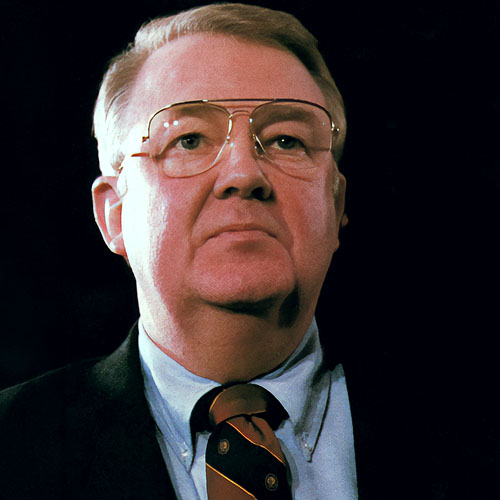
I then asked the commissioners to imagine a press conference at which Attorney General Edwin Meese Ill congratulated Chairman Henry Hudson for the wonderful job he and his fellow commissioners had done in expanding the availability of adult erotica. “Yes,” Meese would say, “I’ve been wrong about the evils of smut; my president has been wrong. I have made a terrible mistake, but I am a man who learns ….” He would then urge the American people to listen to the commission’s recommendations about legalizing adult erotica.
Another member of the commission, one who had been questioning me vigorously, interrupted my scenario in midsentence and quipped: “I learn, too, and I am not going to ask you a question ever again.” Several of the commissioners and many observers laughed, but an important point had been made. It was clear to everyone that this was a captive commission with very limited freedom to follow the evidence and abide by our constitutional presumptions in favor of maximizing freedom of expression. The commission was going through the motions of trying to look objective, and some members really were trying to be fair, but the majority’s direction was preordained. The most that could be expected was a split recommendation or a strong minority statement.
The commission’s own charter states that its dual objectives are:
- “To determine the nature of pornography in the U.S. and its impact on society.”
- “To make specific recommendations to the Attorney General concerning more effective ways in which the spread of pornography could be contained, consistent with constitutional guarantees.”
Thus, the express assumptions underlying the commission’s work are that it will establish the need to contain pornography, and that there are ways to do so which are consistent with constitutional guarantees. The attorney general, in this case, imposed an Alice in Wonderland style of justice in which the sentence precedes the trial.
When the First Amendment loses, we all lose the power to choose. To advocate censorship is to choose not to be able to choose at all.
The desire for the commission to recommend the containment of pornography is also implicit in the attorney general’s choice of commissioners, as well as in the commissioners’ choice of witnesses. A report by the American Civil Liberties Union documents the fact that, prior to their selection, a clear majority of the commissioners were on record as being in favor of more vigorous efforts to repress sexually explicit material.
When Chairman Hudson was commonwealth’s attorney for Arlington, Virginia, he closed all the adult bookstores and theaters and pressured video stores to stop renting X-rated films. Dr. James Dobson, the president of “Focus on the Family,” an organization that advocates family and traditional values, has sermonized against “liberal” attitudes and pornography. Father Bruce Ritter, founder of Covenant House, a shelter and counseling service for runaway children, has railed against the evils of the sex industry for more than a decade. Harold “Tex” Lezar proposed numerous law-enforcement initiatives against pornography well before the evidence was completed. Federal District Court Judge Edward Garcia is a former county prosecutor who vigorously sought obscenity convictions. Diane D. Cusack, vice-mayor of Scottsdale, Arizona, recently spoke to a group of antiporn advocates suggesting that they photograph license plates of citizens who patronize adult theaters. Alan Sears, the commission’s executive director, is one of the few federal prosecutors who has brought cases against consensual adult pornography in recent years.
The “trial” itself-the testimony of the witnesses-was also stacked heavily against freedom of expression. Of the 208 witnesses, at least 160 advocated greater restriction of sexual expression. The few witnesses who opposed any restrictions were usually called late in the day, after press deadlines had passed. Those witnesses who testified in favor of more censorship were rarely cross-examined, while those who opposed censorship were often grilled mercilessly.
This double standard shone through when former Penthouse and Playboy models testified. Former Playboy Playmate Micki Garcia accused Playboy of sexual harassment, prostitution, job discrimination, and an assortment of other crimes, ranging from rape to drug use to murder. It was just what the commission wanted to hear. So, despite the serious nature of her charges and the scant evidence she provided in support of them, she was not vigorously cross-examined.
But when former Penthouse Pet Dottie Meyer testified favorably regarding Penthouse, the commissioners ripped into her with a vengeance. Meyer explained how she had benefited from her experience as Pet of the Year, how her marriage had been strengthened, and how she had done exactly what she chose to do. This was not what the commissioners wanted to hear, and they launched a well-prepared attack on Ms. Meyer’s credibility by questioning information about her that Penthouse had published:
“Is it true then that you prefer men who dominate you in bed? … And that you are especially attracted to rough and tough men who live dangerously? … That you are preoccupied by sex? … Do you have a collection of vibrators? … You were married for ten years when you posed for the centerfold, but your employer quotes you as saying at that time, ‘I want a man who takes over my life and tells me what to do.’ And that too was a quotation?”
As the commissioners were shooting these questions, I whispered to her that she had the right to refuse to answer such personal inquiries. But Ms. Meyer wanted to convince the commissioners that her account was true. She answered every question with dignity and candor.
Perhaps the most disturbing aspect of the commission’s public hearings was the pathetic parade of victims, perpetrators, and policemen. They were certain that it was the “devil porn” that turned good boys into crazed rapists, and the commission made sure that this belief would come through loud and clear in the pubIic record. Commission investigators drafted the testimony for some victim witnesses and helped some perpetrators draw a relationship between their perversions and smut by asking such leading questions as: “Do you think there came a time in your life when you were almost obsessed with the consumption of pornography?” (The themes of obsession, addiction, and compulsion recurred throughout the hearings, though the evidence was nearly all anecdotal.) Nor was there a minority counsel — or commission member — who objected to such biased questioning of the witnesses.
All in all, the hearings were a mockery of both social-science and constitutional principles. The methodology employed by the commissioners violated several cardinal rules of social-science research. For example, before any scientific relationship can be established between a genre of expression and particular conduct, both the expression and the conduct must be defined with specificity and certainty. A careful, precise definition of “pornography” and criminal or deviant behavior prevents these terms from being expanded, contracted, or changed to fit the emerging data. Moreover, the definition of pornography (the alleged criminogenic expression to be evaluated) must be singular and not multiple, so that the commissioners can test its various factors and determine which, if any, of the factors may be related to criminal behavior.
But the commission’s definition of pornography is so vague, so multifaceted and so capable of being expanded and contracted that it would be virtually impossible to design a scientifically valid experiment to determine its relationship to any such behavior. The definition first requires that the motive of the writer, artist, photographer, or publisher be discerned; the material must be “designed to be sexually arousing.” It then establishes six independent, though overlapping, subcategories of pornographic portrayal: children, pain, humiliation, sexual abuse, sexual conduct, and sexual organs. Finally, it requires that such portrayals be “a dominant theme” in the work.
It would be difficult to conduct a valid experiment on any one of these vague categories. When they are all thrown together into one general category called “pornography,” the task becomes impossible. Even if it could be shown that pornography so defined did have a relationship to certain kinds of behavior, we could not determine which of the six contributed most, least, or at all.
The dangers of testing such a broadly defined concept are obvious. Let’s say a Communist government set out to prove the evils of pornography. But pursuant to its atheistic orientation, it included in its definition of pornography “portrayals of sex and violence in the Bible.” If their research did establish a relationship between “pornography” and crime, could it then be argued that the Bible contributes to crime? Of course not. The point is that it is always possible to smuggle a particular category of expression into a broad definition and then burden it with the baggage carried by other categories. (Sex-education textbooks, birth-control literature, and gay magazines are other examples of controversial portrayals that could easily be smuggled into a broad definition of pornography.)
The commission’s double standard shone through when former Penthouse and Playboy models testified about their experiences.
Thus, even if the commission were to conclude that pornography, as it has chosen to define it, does contribute to violent crime or any other evil, that conclusion would be worth very little unless the commission were able to relate the evil to specific, carefully delineated and defined subcategories of expression (such as violent pornography or child pornography). But its working definition is too inclusive and multifaceted to permit any such delineation.
Another important principle of social-science research which the commission has chosen to ignore is the elementary rule of causation and prediction. In order to derive any meaningful association between a genre of expression and a particular activity, it must be proven that a significant percentage of those who engaged in the behavior were exposed to the expression, and that a significant percentage of those who were exposed to the expression went on to engage in the behavior. For example, a close association between inner-city heroin addiction and acquisitive crime has been established because: 1. A significant proportion of inner-city acquisitive crime is committed by heroin addicts; and 2. The vast majority of inner-city heroin addicts commit acquisitive crime. But far less of an association between poverty and acquisitive crime has been established since, although a significant proportion of acquisitive crime is committed by poor people, the vast majority do not engage in acquisitive crime.
To demonstrate the application of this rule in the context of the commission’s work, let us hypothesize the absurd conclusion that every single rapist in America had previously read a particular erotic magazine. We could then say that 100 percent of the rapes were preceded by exposure to that particular form of expression. We would still have to determine what proportion of readers of that magazine went out and committed rapes. According to the 1984 figures, approximately 99.97 percent of the readers of the country’s two most popular erotic magazines did not commit rapes. (That would make the readers of these magazines purer than Ivory soap!) The fact that three out of 10,000 readers may have committed rapes — and the actual figures are almost certainly much lower — can be put into some perspective when compared to the percentage of churchgoers, Republicans, college fraternity brothers, musicians, or members of other categories who committed rapes in 1984.
There is simply no support for the proposition that any more than a random number of persons exposed to erotica — pornography, by the commission’s definition — have engaged in sexual violence. Indeed, there is at least as much evidence suggesting an inverse relationship between erotica and sexual violence as there is to suggest a direct relationship. For example, several countries without censorship have far lower rates of sexual violence than countries that do censor pornography. Indeed, there is evidence of some reduction in sexual violence in several countries after legalization of pornography. Moreover, some groups that are not attracted to pornography seem to have higher rates of sexual violence than other groups that are.
This is not to suggest that there is, in fact, a negative. correlation, or that pornography causes a reduction in sexual violence. What it does suggest is the difficulty of establishing any causal relationship — positive or negative — between pornography and sexual violence. That difficulty has been turned into a scientific impossibility by the failure of this commission to comply with the most basic rules for evaluating empirical research. The commission didn’t do much better with the guidelines governing our legal approach to freedom of expression.
In our legal system, there is at least a very strong presumption that a particular form of expression is protected by the First Amendment unless that presumption can be overcome by clear and convincing evidence of serious harm. This proposition was best articulated by our Supreme Court in the 1949 case of Terminiello v. Chicago:
“[A] function of free speech under our system of government is to invite dispute. It may indeed best serve its high purpose when it induces a condition of unrest … or even stirs people to anger …. That is why freedom of speech … [is] protected against censorship or punishment, unless shown likely to produce a clear and present danger of a serious substantive evil that rises far above public inconvenience, annoyance or unrest.”
The fact that some people may be offended by a particular expression should not, by itself, give the state the power to prevent other adults from reading, seeing, or listening to that expression, so long as they do not thrust it upon unwilling recipients or make it available to children. As Justice John Harlan, himself a great conservative and somewhat puritanical, once put it: “[l]t is … often true that one man’s vulgarity is another’s lyric. Indeed, we think it is largely because government officials cannot make principled distinctions in this area that the Constitution leaves matters of taste and style so largely to the individual.”
Nor should erotic material be banned simply because it may be “sexually arousing” (to quote from the commission’s working definition of pornography). In a case decided just last year, the Supreme Court struck down a portion of a Washington State law that would have banned material that provoked “normal, healthy sexual desires.” The court ruled that the First Amendment protects erotic material which “does no more than arouse ‘good, old-fashioned, healthy’ interest in sex.” It is as American as apple pie to be sexually aroused, and it is equally proper for a writer or photographer to design “expression to be sexually arousing.”
Finally, if there has been one fixed star in our constitutional constellation, it is that no expression may be banned on the ground that it affects attitudes in a negative way. It is a primary function of free expression to affect attitudes without governmental control. The Supreme Court made this clear when it reversed New York State’s attempt to ban the movie version of Lady Chatterley’s Lover on the ground that it presented adultery in a favorable manner: “What New York has done, therefore, is to prevent the exhibition of a motion picture because that picture advocates an idea — that adultery under certain circumstances may be proper behavior. Yet the First Amendment’s basic guarantee is of freedom to advocate ideas. The State, quite simply, has thus struck at the very heart of constitutionally protected liberty.”
Yet this “very heart of constitutionally protected liberty” seems to have been forgotten by some members of the commission. I quote one of them: “If an attitude is deeply ingrained, then behavior will be affected. We have to be concerned about attitudes. If attitudes toward marriage are being affected by pornography which says that extramarital and premarital sex is [all right], then we have there a major attack on the core institution of our nation — the family.”
If members of the commission believe that pornography promotes bad ideas or attitudes, then they are making the strongest argument for its constitutional protection. If anyone disagrees with those ideas, they should try to answer them. They should enter the competition in the marketplace of ideas. But they should not close down other stalls that are selling different ideas. That is not our way.
I hope the American public will realize the dangers of government censorship. Once the door is opened to censorship, it will be difficult to control. Deep down, everyone would like to censor something. Many Jews believe that swastika-wearing Nazis should be prevented from marching through neighborhoods of concentration-camp survivors. Some blacks would like to ban books such as Little Black Samba and Huckleberry Finn, which present offensive racial stereotypes. Gays disapprove of films that project a negative image of homosexuality. If the government is to ban one, it will eventually ban all. If it is to refuse to ban all, it must refuse to ban any.
If feminists succeeded in banning material offensive to them, then fundamentalists would surely succeed in banning material offensive to them. The choice is between a society in which everyone must tolerate some offensiveness, or a society that permits only expression that is offensive to no one.
A few years ago, a feminist instructor at Harvard tried to have Playboy removed from the library because she was offended by it. Imagine a university library after every instructor removed whatever he or she found offensive. The building could be converted to squash courts, and the few remaining books and magazines stored in some file cabinets.
It is no victory when the Left succeeds in banning something conservative in reaction to the Right’s success in banning something liberal. Every time either the Right or the Left achieves this kind of “victory,” the First Amendment is the loser. And when the First Amendment loses, we all lose the power to choose. To advocate censorship is to choose not to be able to choose at all.
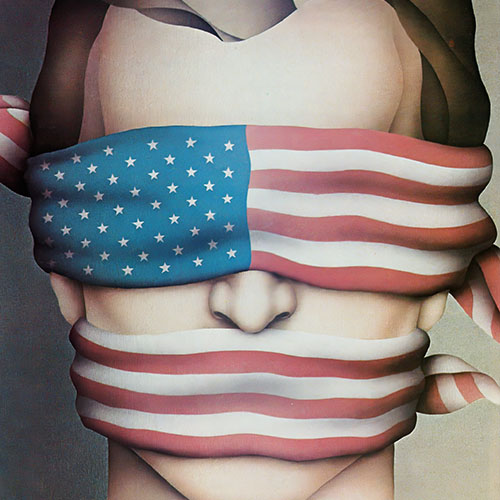
The Meese Commission reflects the Reagan administration’s basic distrust of the freedom of the American people to choose what they wish to read, see, hear, and believe. It is a late-twentieth-century version of the sixteenth-century Inquisition. Yesterday the “devil” was those religious views that the Church considered to be nonconformist. Today the devil is what a commission defines as porn. The victims are always the same: human dignity, freedom of choice, and the right to be different.
You may have noticed that we hit this topic twice this month, this being, of course, that the topic falls rather solidly into what were foundational motivations for Bob Guccione way back when he first started on this journey. The Messe Commission represents what happens when people get scared about their own biological urges. Those people probably hate apples too. … At least the “smut busters” lived a politically short life, as those sorts of things tend to do. Still, we need to be careful because these folks might show up again banning books in Florida or something.