He’s articulate, open-minded, and in demand for concert events like “Rock the Smokies.” So why is he considered such a rebel?
Interview with Travis Tritt
Travis Tritt couldn’t have picked a worse time to amble into Nashville. When his first single, “Country Club,” was released in 1989 — the beginning of country’s new boom-the competition included talented newcomers Garth Brooks, Clint Black, and Alan Jackson. Yet Tritt distinguished himself early with his grits-‘n’-gravel voice, and with a blend of “outlaw” Southern rock, traditional country honky-tonk, and rhythm and blues that had more in common with Hank Williams, Jr., than Hank senior. Unlike the modern-day cowboys — known collectively as “hat acts” — the long-haired, leather-clad Tritt looked to rock for his sartorial style, driving the point home by calling his 1992 concert series with Marty Stuart the “No Hats” tour.
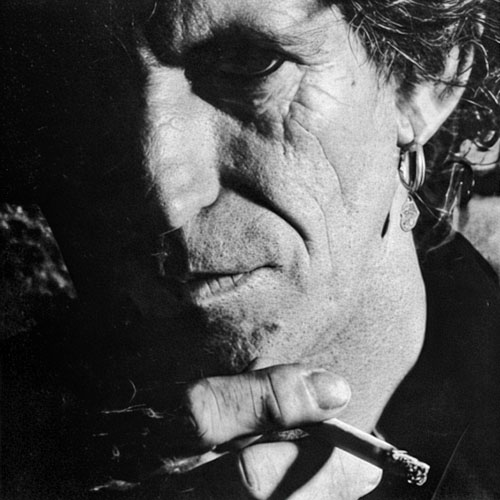
Today, Tritt, at 33, looks every inch the blue-collar rebel. Yet he is surprisingly diversified in his music and complex in his personality, self-possessed enough to go head-to-head with R&B cyclone Patti LaBelle on a scorching soul standard, “When Something Is Wrong With My Baby,” and to reunite the seventies country-rock band The Eagles for his video for “Take It Easy,” from Common Thread, the Eagles tribute album. Tritt is also as comfortable with Rolling Stones guitarist Keith Richards as with country legend George Jones.
Since breaking into the business with ballads like “Help Me Hold On” and his cheeky signature tune, “Here’s a Quarter (Call Someone Who Cares),” the singer-songwriter has sold more than ten million albums.
Born and reared in Marietta, Georgia, “before it was a suburb of Atlanta — more like country, out in the woods,” James Travis Tritt was the older of two children, his sister, Sheilah, arriving six years later. Their father earned a living as a jack-of-all-trades, driving a potato-chip truck, managing a gas station, sorting mail at the Post Office. Their mother, who attended one of Patsy Cline’s and Hawkshaw Hawkins’s last shows while pregnant with Travis, was a homemaker and part-time bookkeeper.
Writing his first song (“Spend a Little Time”) at 14 upon being dumped by a fickle girlfriend, Tritt was already serious about a future in music. At 24 he won a contract with Warner Bros. Records by virtue of some demo tapes he had recorded for a national talent contest, so surprising the label executives with his nervy insistence on selecting his album repertoire and his own singles that they granted his wishes — a move nearly unheard of in Nashville.
Predictably, Tritt’s outspoken attitudes on music and the music business have cost him dearly in some ways — he’s pretty much excluded from Nashville’s hallowed inner circle — but he’s racked up a couple of coveted honors, including the Country Music Association’s Horizon Award (for Best New Artist) in 1991. That same year he and Marty Stuart won a Grammy (Best Country Vocal Collaboration) for their duet on “The Whiskey Ain’t Workin’.”
You can have an outlaw persona, but that doesn’t mean you have to be an asshole. If people ask me for an autograph, they get one.
Soon after, the awards stopped, even though Tritt’s record sales remain at the gold and platinum levels. He’s also still in demand for prestigious concert events like “Rock the Smokies,” a ten-hour country-and-rock festival, sponsored by Skoal Music, to be held July 6 in Newport, Tennessee, where Tritt will share the stage with Hank Williams, Jr., the Charlie Daniels Band, 38 Special, Marty Stuart, and the Marshall Tucker Band. (Tickets available through TicketMaster.)
Our interview got under way in a hotel in Nashville, where Tritt had come from his 75-acre working farm in Powder Springs, Georgia, and registered as Morty Berkowitz. (His publicist says, “I swear, I think he has a Jewish alter ego.”)
You’re here in Nashville to accept a gold-album award from your record company. Do you have what you consider to be truly good friends here in this business?
Tritt: Very few. One of the reasons, I guess, is because I don’t live in Nashville. On purpose. The label almost demanded it at one point. But I felt that this was a place where I come to work. And if I’m going to be at home, I want to be someplace that feels like home. And I think the fact that I have spoken my mind about certain things in the past has alienated me in some ways from other artists.
Is that why the awards stopped?
Tritt: I think so, because I became outspoken. Look back at my career. In 1991 I won the Horizon Award from the C.M.A. In other words, the C.M.A. considered me the most promising new artist in country music. But after that, zip.
This outlaw image is not something that I created. It’s not even something that I started. I made a statement about somebody else’s music, without regard for political correctness. And I was also involved in a controversy at NBC. I was “banned for life” from “The Tonight Show.” And within a few weeks of that, Helen Kushnick, the executive producer of “The Tonight Show,” lost her job. I was basically going with my heart in both situations. Unfortunately, my heart is directly connected to my mouth sometimes. And as a result of those two things, I’ve been branded as this controversial outlaw.
The statement you made was about Billy Ray Cyrus. You said, “I don’t care for ‘Achy Breaky Heart’ or the video. And I don’t want to see country music get to the point where it’s turned into an ass-wiggling contest.”
Tritt: Yes. And I still stick by it. The interesting thing is that I heard at least ten other big artists in this business make the same comment behind closed doors. And after I made the comment publicly, the press asked them point-blank, “What do you think about what Travis said?” And they went exactly the opposite of what they’d said privately. They were so hypocritical it was amazing.
But they were scared of what it would do to their careers. So I paid the price for speaking my mind and breaking the cardinal rule in country music, which is, Don’t say anything negative about anything or anybody.
You stick by it, but do you regret having said it?
Tritt: No, if I had it to do over, I’d say it again. Because it was the truth. Although at the time the resulting outlaw brand bothered me. But since then I’ve come to carry that title with a lot of pride. Because I’ve had a lot of talks with people the title was originated for — Willie [Nelson], Waylon [Jennings], Johnny Cash, Charlie Daniels, and Hank [Williams], Jr. And every one of them said, “If they call you an outlaw, it means you’re different, in a day and age when you turn on your radio and there’s 20 new people trying to sound like Garth Brooks or George Strait.”
We’ve got one of each of those people. We don’t need 50 more.
You came into the business after playing clubs in the South for a few years. What was the roughest place you played?
Tritt: There were two that were equally rough. One was a lounge that was connected to a very low-rent, run-down hotel where everything went on, from prostitution to drug deals. The other place that I played was a semi-biker-bar. That was one of those places where you make a mental note of where all of the exits are right off the bat, because you know you’re going to have to use them.
But I learned more in those two places than I did in any other place that I played in, because the people who come there don’t care about the music. They’re there to drink and shoot the shit with their buddies. And to get their attention and hold it for any period of time took a lot of experimentation.
Your live show is very high-energy, pin-‘em-to-the-wall. I wasn’t quite prepared for it the first time I saw it.
Tritt: The most frequent comment I hear from people, especially younger people who never really listened to country music, is, “We don’t like country music, but we like you.” I think it’s a combination of the kind of music that I do mixed with the type of show that I do. Before I got my record contract I went to see everybody from Willie Nelson to George Jones to Aerosmith and ZZ Top and Bob Seger. And most of the country-music shows were fairly boring in comparison to the rock shows. Now, I loved Waylon, growing up, always have. He had some rock energy, and Willie did too. But I guess where I got turned on more to that kind of thing was Hank Williams, Jr. In concert, he might do a cover of anything from “Walk This Way” by Aerosmith to ZZ Top’s “La Grange.” You never knew what Hank was going to do. It was always exciting. And I think that’s where I saw more of a big melting pot of people. You’d go to Hank’s shows and there were bikers and rednecks and cowboys and straitlaced country-music people and hippies, and the whole deal just thrown in together. And they all had a great time.
Did you want to be Hank junior?
Tritt: There probably was a period in the eighties where I would have wanted to be Hank, or be like Hank. I studied him. Over time, though, I started seeing things I didn’t like. He had a way of hurting and turning his back on the fans who loved him so much- not putting on a decent show, walking out and giving the crowd the finger. And a lot of people out there didn’t care. They would have drank his bath water no matter what he did. And it was a turn-off for me, because I was sitting there thinking, “These are the people who got you where you are.”
That’s an important thing for a young performer to realize.
Tritt: Well, I think it’s a mind-set. You can have an outlaw persona, but that doesn’t mean you have to be an asshole. Sometimes I think it’s very silly for a complete grown-up to ask for an autograph on a napkin that I know is going to end up in the bottom of somebody’s sock drawer, but if people ask me for an autograph, they’re going to get one.
Your autobiography, Ten Feet Tall and Bulletproof, is more of an industry manual than a life story. What kind of kid were you?
Tritt: My maternal grandfather, J. T. Merritt, is a pastor in the Assembly of God church in Marietta, Georgia. So my mother made sure that I was in church every time the doors were open. I tried my best to follow that path of teaching, which I think contributed to alienating me from a lot of the other people my age. On top of that I was kind of an introvert. I was very shy. My only form of real expression was my music. Even that was very repressed for a long time, because my father thought that playing music was something sissies did.
Starting in the fourth grade, I used the guitar to introduce myself to every other person I met. All the other people in the church, and my mother, very much encouraged me in my music. Even my grandfather. He wasn’t thrilled when I said, at 22 years old, “I’m quitting my job in heating and air-conditioning sales and I’m going to go play clubs and bars.” But he just said, “I put him in God’s hands.” He always believed that things would turn out good. On the other hand my dad said, “When I was growing up, the only people who played guitar were too lazy to get out and work.”
Is part of your drive an attempt to show him you could do it?
Tritt: Very much so. When I was a kid it was like, “Dad says I’m never going to make it as a musician, so I’m probably not.” But even at that age I knew that I wanted to grow up to be somebody, and do something big, and make a lot of money, just so I could come back and say, “See, Dad, I told you I wasn’t going to turn out to be a nothing.”
You didn’t write the song “I’m Gonna Be Somebody,” which was written by songwriter Jill Colucci, but you might as well have.
Tritt: That was my life story. I think that song gives people a lot of inspiration. Tracy Lawrence told me that he was sitting in the second row of one of my concerts, and that song had just come out. And he said in the middle of the song he stuck his fist in the air and went, “You’re exactly right. I’m going to be somebody too.” And that was the thing that made him decide to come to Nashville.
To make it in this business you’ve got to have that willingness to go up against anybody and say, “I’m going to do this in spite of what people think.” My dad is a great supporter now. He’s the first to admit I proved him wrong.
How bad did it get between you? Did it come to blows?
Tritt: Oh yeah. My parents ended up getting a divorce when I was 15 years old, and then remarried each other when I was 18. But I felt largely responsible for driving my parents apart, because my father and I had a direct conflict, right down to threatening to kill each other. He left after one big confrontation, and I said, “I’m not going to be here when he gets back.” And my mother said, “Maybe it’s time that we all just go.” So I took a lot of that blame on myself.
But it was good for me. I had to go to work to bring home some money. So I left there a child and came back a man.
How did their divorce color your own perception of marriage? You got married right after your parents got back together?
Tritt: Yes. I got married basically to get out of the house, because once the family got back together I still had conflict with my father. And at the time I was very much in love. My father screamed and preached that this was the wrong move, and that it would never last. And he was right. But I had to do it anyway. I think I tried my best to make the marriage work when I knew it was doomed, just to get back at him. But there was no way that I could keep my sanity and stay in that relationship just to prove something to my father.
According to your book, there was a period when you were experimenting with drugs fairly heavily.
Tritt: It became a problem for a short time. I was playing clubs, and I knew I had at least a singles deal pending with Warner Brothers. But things got held up. I signed with them in late 1987. And I started recording in late ‘88. But my first single didn’t come out until the fall of ‘89. I was doing six sets a night, trying to keep that high energy up for all of my local fans as well as the people at the label. And to help deal with that I started taking speed, and pills to keep me awake. After the word finally came down that the single was scheduled to be released and they were going to send me out on tour to radio stations, I realized I could blow the only chance I’d ever had to make a dream come true. And I stopped right there, cold turkey.
I’ve been fortunate in that I am so much of a control freak that I can usually get rid of anything I see as a potential detriment to me. I’ll be damned if I was going to screw up a career over a bottle of pills.
In many ways, you’re the opposite of the macho man that your father wanted you to be. And yet one of the tabloids reported that you shot a dog some years back.
Tritt: First of all, I’ve always been a tremendous dog lover. I’ve got five dogs at home right now. But yes, there was a situation in ‘84. I had a pit bull that was the sweetest dog you could ever imagine. I was living in a subdivision, and I had my backyard fenced in, and this one stray chow kept jumping over my fence. And my dog ended up pregnant. At the time I was working in clubs and making no money, so I couldn’t afford to have her spayed. And here I had eight puppies, and I had to pay for the cost of worming and everything else puppies need, and then I had to try to find good homes for them. We have a leash law in Georgia, and every time I saw the chow, I called the pound. But by the time they’d get there, he would jump over the fence and be gone. This went on for months and months. And my dog got pregnant for the third time.
Well, one particular morning this dog turned up in my yard again. So I got a piece of rope, and I went to tie him to a tree. And when I tried to get close to him, he started growling and snapping and raising cain. So I thought, “There’s nothing I can do with this dog.” I knew if the dog was taken to the pound, they were going to put it to sleep anyway. So I went back inside and I got a gun, and I shot the dog. I hated to do it, but I felt like I had no choice. I was standing outside in my underwear when I shot him, and I went back upstairs to get dressed. But when I went outside to bury the dog, it was gone. I thought it was dead, but it had managed to crawl underneath my neighbor’s car. And my neighbor called the Humane Society and the police. And the next thing I knew, the Humane Society said they were charging me with cruelty to animals.
Normally, that’s a misdemeanor. But there was a lady, an avid member of the Humane Society, who lived down the street. And she thought that I just up and shot a dog for no reason. She wrote letters to the judge, asking for any other charges that could be brought against me. So they came up with “discharging a firearm with in 50 yards of a public street” — reckless endangerment. And that was a felony.
I’d never had any kind of problems with the law before. And if the judge could have made the felony charge stick, she would have given me six months in jail and a $5,000 fine and 300 hours of community service. Fortunately, I was able to prove that I was 70 yards away [from the street], so by the letter of the law I was outside of the restrictions. The judge threw the book at me anyway — gave me six months probation, which I served. And I had to pay a $2,000 fine, and do 200 hours of community service.
I feel like I got railroaded by the court system. But actually there’s a funny postscript to this story. One of the pleas that I entered to keep from serving jail time was the fact that I was working on a music career, and had some possibilities there. When my attorney mentioned that, everybody just kind of laughed. But several years later a judge who was running against my judge asked me to perform at a fund-raiser, which I did. And he ended up beating my judge. So I ended up getting revenge, I think.
Every night there are 15 or 20 girls who are the equivalent of homecoming queens, and they’re literally throwing themselves at me.
Let’s get back to the music. Some people think your music declined into formula after the second album — that you figured out what worked and just stayed with it instead of concentrating on growth.
Tritt: The way the business is set up, you’re only as big as your last hit. And with all the new people and new things happening out there, once you find your niche and what works for you, you become very scared to get away from it. If you look at the people who’ve tried that — Reba McEntire, for example — they’ve gotten trashed for it. I could try to do something completely different, but I’ve figured out what my fans like and expect from me. Every album I’ve ever done has been platinum, so I must be doing something right.
Actually, we’re working on a new album right now, to come out in August. Don Was is the producer. Everybody at my label has been saying, “Radio is screaming for you to do a really country album.” Well, the first thing I have to do is sit down and figure out what country is these days. But we’re going to go in and strip it down and simplify our approach. In other words, instead of having a huge roster of musicians, we’ll use a band of five or six people, and cut everything live, with very little overdubbing. It’s a completely different sound for me.
Kenny Rogers, with whom you appeared in Rio Diablo, has become more a professional personality than a musician. Is there a danger of acting doing that to you?
Tritt: No, because I’m not pursuing the acting as a mainstay in my life. So many times these days you see people in music, and especially country music, get shoved in front of a camera and told to act, based on the fact that they’ve had a few hit records. And most of those people can’t act. I never knew that I could, until the “Anymore” video. They sent me that script, and I couldn’t believe that an idea so powerful had come out of a song that I had written. But it was one of the scariest things I’ve ever done. One, because it was my first time to do any real acting, and two, because I was portraying a disabled American veteran. And I played that role around people who actually were disabled veterans, for four days, in a VA hospital in Murfreesboro, [Tennessee]. My reaction before I went in was, “What if these Vietnam veterans come up to me and go, ‘Who does this kid think he is, trying to play one of us? Hell, he’s never even spent a day in the service. And he’s got two perfectly good legs, and we’re in these wheelchairs for life.’”
But I went in two days early to start working in a wheelchair. And these guys were not only cordial, they were supportive. They helped me in every way. They’d say, “No, your posture’s not right in the wheelchair. If you were actually disabled, this is how you would sit.” And, “No, you need to position your legs differently …. If you were going to fall out of the chair, this is how you would fall.” I learned so much. And when the cameras weren’t rolling, they were telling me stories about Vietnam. They just seemed to be so happy to have somebody to tell their stories to, and to have somebody to listen.
What did you make of the Kenny Rogers phone-sex scandal, his private telephone-sex hookup with girls around the country?
Tritt: I think it was a combination of boredom mixed in with a mid-life crisis. It’s one of those situations where you have to know what you want in life. I’ve been married and divorced twice. And I’ve been with a lot of wonderful women. But at some point you have to realize that if you’re just out there for sex, that’s one thing. If you’re looking for a true companion, that’s another. And it takes an awful lot of searching to find that person. Most men in America will never be in the position of a Kenny Rogers — or even a Travis Tritt, for that matter — in that they can go out and chase their fantasies. I did it for a long time, because entertainers are sort of perpetual adolescents.
There was a period where you got an AIDS test every two months?
Tritt: Yeah. I played Russian roulette every day, running around having unprotected sex. It was every fantasy I ever dreamt. And looking back on that now, I’m glad it happened. First of all, I’m fortunate to still be alive. But more important, I learned a tremendous lesson from it — the fantasy of sex is always better than the reality. And once the fantasy has become reality, you don’t have much left.
Were you living a completely wanton rock-‘n’-roll life?
Tritt: Well, you might say it was adult kindercare, the adult adolescence that I went after as a result of who I was. You’ve got to look at where I come from — of being a shy, withdrawn kid, brought up in the Assembly of God church — as compared to what I was thrust into. I never had the gift of gab, never really could talk to people, and therefore didn’t date a whole lot. Never gave myself the opportunity to be rejected, and married the girl that I gave my virginity to. I expected that to be my whole life. Then I went 180 degrees into a situation where every night I’m walking off stage and there are 15 or 20 girls who are the equivalent of the homecoming queens of my high school, and they’re literally throwing themselves at me. And man, I was like an inmate just being released from prison [after] 20 years. I lived a very decadent lifestyle. And I don’t regret any of it. I was reaching out there and grabbing ahold of something I had been deprived of my entire life and felt that I needed.
I read that you have a fairly big gay following. Does that surprise you?
Tritt: I was stunned by it, actually. But never offended by it.
Do you think homosexuality is wrong?
Tritt: According to the way I was raised and my church teachings, it is. It’s very much taboo. I can definitely stand up and say, “No, I’m not one, and I would never be one,” but I can’t really condemn somebody else for being that. But I still have a problem with the homosexuaI community. I understand that because they’ve been in the closet for so long, they have a tremendous need to come out and stand their ground, and to be very vocal and graphic about what they are. But I see gay rallies on television and in the streets, and my feeling is that if you’re going to be homosexual, that’s fine. But keep the sexual act at home, behind closed doors. Regardless of whether you’re heterosexual or homosexual, sex is something that’s personal and private.
You recently got engaged to a young woman named Theresa Nelson. You used to say you wouldn’t get married again. Didn’t you have your wedding rings melted down into a medallion to remind you of this?
Tritt: Yes, but frankly I didn’t work as hard as I should have on my marriages. I thought that you meet somebody that you’re really crazy about, you get married, and it lasts forever. But marriage is hard work. And I saw two women who once professed love for me take me to court and absolutely burn me at the stake. I was very bitter as a result of it. But I’ve become more thoughtful of what’s going on around me, and I realize there are several things still lacking in my life. One of them is children. I think I could be a very good father. And I hope to have that opportunity. Another factor is simply that I don’t want to grow old by myself. I don’t think anybody in their right mind would. So I watch the people who have had successful relationships, like Waylon Jennings and Jessi Colter, and I try to figure out what keeps them going. I honestly believe that one of the reasons they’ve stayed together so long is because of what they do on a daily basis. Everywhere you see one, the other one’s not far away.
I’m beginning to get the sense that your general rebellious attitude comes from a strong sense of right and wrong — a personal code of behavior.
Tritt: Basically. If you’d asked me six years ago what my political party was, I would have said, “I vote for the guy I think is going to do the best job.” And nowadays I consider myself to be pretty much a right-wing Republican. Just simply because of things as I view them, based on, “This seems right, and this seems wrong to me.” I’m not motivated by anything other than my heart.
Without getting into the politics of it, we can think of a few people who might give Travis Tritt a quarter in case he needs it. That said, his first big hit was in 1990 and he still tours today, so he must be doing something right. At least one of our little group swears that walking up to someone and saying, “Well, hello, T-R-O-U-B-L-E” in a social situation will do 90% of the introductory work if the object of your attention recognizes the song. Of course another one of remembers not only when pay phones were around but when they only cost a dime. We try not to talk to that one too much, though. Too many stories.