The magazine [on your screen] recently celebrated its 45th anniversary, but the very first issue of Penthouse came out in London 50 years ago this month [March 2015] . It’s time for our origin story.
50 Years of Penthouse Magazine
When Penthouse was born, 50 years ago, it’s safe to say that no one, not even creator Bob Guccione, could have imagined that it would one day be hailed by Vanity Fair as “one of the greatest success stories in magazine history, the cornerstone of a multimillion-dollar publishing empire.” In fact, back in 1965, it was far from a sure thing that Penthouse would even see the light of day. “Financing the magazine’s debut was a nerve-racking business,” Fortune magazine reported ten years later. “Guccione was unable to raise any capital, apart from a few thousand dollars contributed by his devoted father.”
“Men are basically voyeurs, and women are basically exhibitionists.”Bob Guccione
But even after he managed to get the first issue printed and began mailing it to subscribers, Guccione faced his first, but by no means last, attack by the powers that be. “An action was started against him under Section II of the Post Office Act for sending indecent matter through the post,” Fortune noted. “He contrived, however, to avoid the summonses until the mailing was completed. He simply remained holed up in his house for a fortnight while two police officers awaited him on the street. All the while he received the proofs of his magazine through the letter box and consulted with his tiny staff over the phone. Then he emerged, stood trial, and was fined. The publicity was a great boon, and the first issue of the magazine, which had a press run of 120,000 copies, sold out within a few days of its appearance.”
 The magazine’s great success in England fueled Brooklyn-born Guccione’s determination to bring it to the United States, which he did four years later. As Rolling Stone once wrote, the “British distributor mentioned that the magazine was outselling Playboy two-to-one among American servicemen in Vietnam — the prime 18-to-30-year-old male demographic. It was then, Guccione says, that he realized his erotic vision could rival [Hugh] Hefner’s in America. So … in 1969 [he] took out a full-page ad in The New York Times showing Playboy’s rabbit logo in the cross hairs of a gun. The caption read, ‘We’re Going Rabbit Hunting.’”
Guccione’s unrestrained, erotically charged pictorials were unlike anything American men had ever seen, but he knew he needed more than steamy pictorials to build on the magazine’s initial sales and then sustain that readership for the long term. Rather than following the Playboy formula of paying a lot of money to big-name authors for second-rate writing, he continued to operate the way he had in London, hiring reporters to challenge conventional wisdom and champion underdogs. Instead of aping Hefner’s windy, pompous “Playboy philosophy,” Guccione published readers’ own erotic experiences and fantasies — and the meaning of “a Penthouse letter” quickly became internationally known. He hired Xaviera Hollander, a beautiful, controversial New York City madam, to write a sex-advice column. These quickly added to the magazine’s spectacular success, as Penthouse both reflected and anticipated the era’s deconstruction of sexual boundaries.
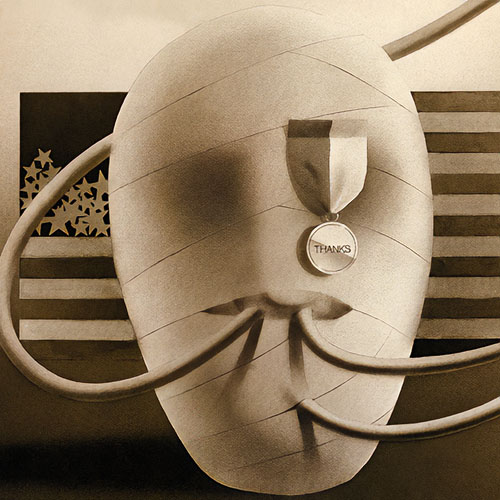
At the same time, in the early 1970s, Guccione found an ideal subject for his journalistic ambitions. As the Vietnam War wound down in bloody failure, he grew increasingly angry about the treatment of returning soldiers. Whether one supported the war (as Guccione had) or not, the fact that hundreds of thousands of young men had risked — and sometimes sacrificed — their lives should have earned them the nation’s highest respect and gratitude. Instead, these GIs were jeered at and scorned, and their medical and psychological wounds went uncared for. Overwhelmingly, they were without jobs or any hope for the future.
Guccione opened an office in Washington, D.C., and hired a prestigious retired Marine colonel to coordinate lobbying for veterans’ needs. Starting in March 1974, Penthouse published monthly articles examining all aspects of veterans’ experiences. Abandoned by almost everyone else, veterans and their families gratefully valued the magazine’s commitment and fervent support. The Washington office placed articles in the Congressional Record and fought tirelessly to ensure that veterans’ issues were addressed in a timely fashion. Even though America finally woke up to its shameful neglect of its military heroes, Penthouse has continued its regular coverage of military and veteran interests throughout the Gulf War and the wars in Iraq and Afghanistan.
The magazine’s success in the U.K. fueled Guccione’s determination to bring it to the U.S.
The military articles were the most important, but only one example of Penthouse’s groundbreaking commitment to investigative journalism. In 1975, two young reporters exposed the deep roots of corruption symbolized by a California resort — where organized crime, the Teamsters Union, the Nixon administration, and shady Hollywood types all met in what the magazine called a “Syndicate in the Sun.” They struck back in a $522 million lawsuit — the largest in magazine history. Although both sides fought to a draw, spending tens of millions of dollars, and finally decided to walk away from further litigation, a year later, using many of the documents that Penthouse had unearthed in its defense, the Wall Street Journal independently investigated the case and published a front-page article that basically reinforced everything that Penthouse had published.
The magazine’s historic investigative reporting earned it a nomination for a National Magazine Award. In 1975 Guccione was named Publisher of the Year by Brandeis University, which said he was a “new force in the world of publishing. He has increasingly focused his editorial attention on such critical issues of our day as the welfare of the Vietnam veteran and problems of criminality in modern society.”
Over the years, the list of reporters and writers published by Penthouse Magazine read like a who’s who of international journalism. They appreciated writing for a magazine willing to spend the kind of money and make the legal commitment necessary to investigate corruption and wrongdoing of all kinds. In the 1980s, the magazine started focusing on abuses by the medical establishment, exposing waste and corruption and covering alternative treatments, many of which have become more mainstream over the years. And once more, these articles earned the magazine dedicated readers and praise from its journalist peers, including the American Society of Journalists and Authors’ Excellence Award in 1995.
Of course, not all Penthouse journalism was heavy-duty life-and-death exposés. The magazine made waves with its coverage of sports, entertainment, and the arts, as just a small selection of the bold-face names who appeared in its pages over the years demonstrates: Muhammad Ali, John Lennon and Yoko Ono, Charles Schulz, Groucho Marx, Pete Townshend, Johnny Cash, Stevie Wonder, Merle Haggard, Steven Spielberg, Willie Nelson, Charlton Heston, Loretta Lynn, Mick Jagger, Billy Joel, Jay Leno, Roseanne Barr, Mike Tyson, Keith Richards, Henry Rollins, Kevin Smith, Russell Brand, Johnny Galecki, Ridley Scott, and Morgan Freeman.
The first anniversary edition of British Penthouse included “the Nudest Beach Set.”
The magazine also published many of America’s leading novelists, offering readers some of the best fiction in the world from such writers as Stephen King, Isaac Asimov, James Baldwin, Anthony Burgess, Gore Vidal, Joyce Carol Oates, Philip Roth, Kurt Vonnegut, William F. Buckley Jr., James Michener, Tom Clancy, and Jimmy Breslin.
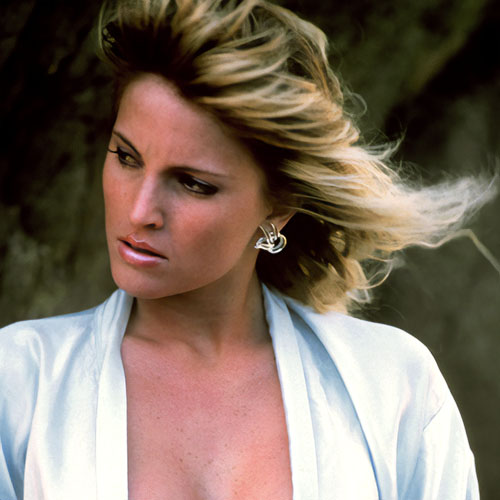
Despite all the prestigious awards and big names, there’s no ignoring the fact that first and foremost Penthouse magazine made its mark over the decades with the kind of bold nude photography that Guccione debuted in its very first issue in 1965. The September 1984 issue with photographs of Miss America Vanessa Williams made publishing history, with a print run of 5,643,370 selling out practically overnight. This was followed up by several other “celebrity” nude pictorials, including Madonna, Gennifer Flowers, Paula Jones, and Tonya Harding.
Rolling Stone magazine, in a tribute published in the twilight years of the Guccione era, ideally encapsulated his legacy: Penthouse “did more to liberate puritan America from its deepest sexual taboos than any magazine before or since,” and was “the greatest adult magazine in history.”
Now, 50 years later, the Penthouse brand includes TV channels, gentlemen’s clubs, websites, international editions, and a line of licensed products that enhance both our lifestyles and our sex lives, allowing us to fully encompass the idea of living “life on top.” …
People really quick at math will have figured out that if our 50th Anniversary happened in March of 2015, then we have already passed our 60th celebration. To put that in some perspective, the #1 song in 1965 according to Billboard was “Wooly Bully” and “Bonanza” was the top show on television. To give perspective to our younger readers, this was 42 years before the release of the iPhone.
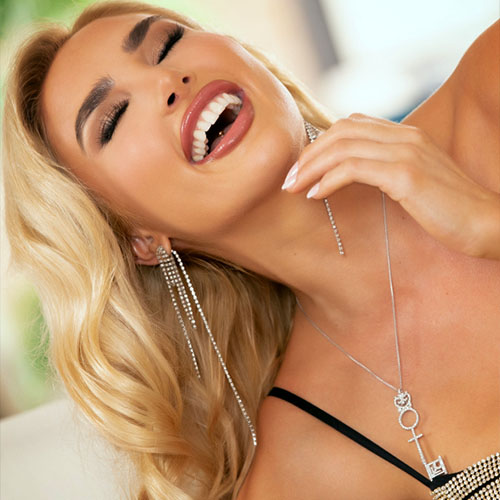
Short answer: We are very old. … And yet we remain very happy doing basically the same thing Bob and his crew were doing when they started, adding perspective to a complicated world and appreciating beautiful women. … On that topic, we should note that although the picture illustrating this article (“DJ”) was in fact the cover of the very first Penthouse Magazine, the image at the top of the page (Amber Dean-Smith) came from Volume 5 of that first year — because it took that long to find a horizontal photograph of a Pet where she had clothes on in the shot.
Longer answer: We are very old, and we tend to operate within rather odd constraints. On the upside, by the third issue, women were proud enough to use their full names for publication. That says something.