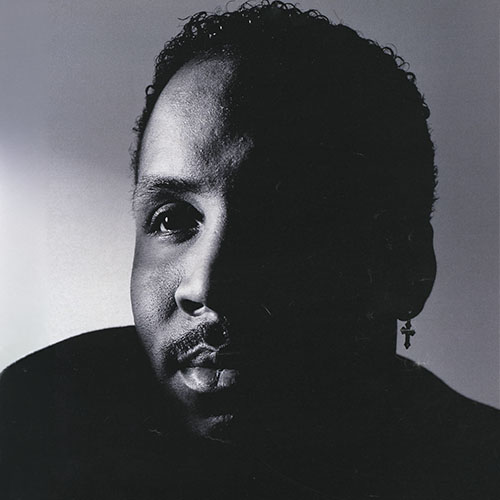
In a conversation with Penthouse, Jeremy Shockey drops the poker face and shows he’s got a lot more on his mind than generic sound bites.
Jeremy Shockey — Tipping His Hand
After four years in the NFL — and the gossip pages — New York Giants tight end Jeremy Shockey says he’s learned how to stay out of trouble in the media:by playing it close to the vest.
“Cautious” is not a word that comes to mind when you think of Jeremy Shockey. On the field, the three-time Pro Bowl tight end has drawn as much — sometimes more — attention for his attitude as for his standout ability. In the Giants’ playoff loss to San Francisco in 2003, for instance, he gave the finger to a 49ers defender and nailed two kids in the stands with a cup of ice. He was fined $10,000 for his efforts. Off the field, he’s been a gossip writer’s dream, having been witnessed living out loud with actress Tara Reid, former NFL star Mark Gastineau’s daughter Brittny Gastineau, and pinup Vida Guerra, to name a few. Shockey has had his share of dust-ups in the media, too, most notoriously a 2003 New York magazine article in which he was quoted calling Dallas Cowboys coach Bill Parcells a “homo.” So when we heard that Shockey was holding back in interviews these days, we found it, well, hard to believe. Of course, there was only one way to find out.
“It’s good to fight. In college, we used to fight all the time. Every practice there’d be a couple of fights. It makes practice go by a lot faster — as long as no one gets hurt. We’d fight and it’d get broken up. Next thing you know, defense is practicing harder. At the end of practice, guys shake hands. No bad feelings. No bad blood.”
Complete this sentence: “Dear Penthouse, I’ve read the stories in your magazine for years and I never thought something like this would happen to me, but …”
Shockey: [Pauses] “But, the information I’ve read in the past helped me out in certain situations with relationships and in life.” [Pauses] I don’t want to get myself in trouble, man.
You spent time in Panama this past off-season. What goes on down there?
Shockey: It’s a cool country — definitely a fun place to go. It’s a place where I can kind of hide out, where people don’t know me. But you’d be surprised. There are football fans everywhere.
What’s this I hear about you and boxer Roberto Duran spending quality time together there?
Shockey: I had the honor to meet him, yes. He’s a great guy. He gives the shirt off his back to everybody. He’s having financial problems because he helped so many people out. People took advantage of him a lot. He told me stories about his life, his fights — things he’d change and things he wouldn’t. It’s funny; I go there and the next thing I read are articles about how he and I are opening up a casino. That’s false. He’s just a good friend to hang out with.
In 2002 — your first year in the league — you made the Pro Bowl, were voted rookie of the year by fans, and dated Hollywood starlets and models. Did you ever say to yourself, “Man, this is too easy”?
Shockey: Not really. Relationship-wise, I had fun. It’s something people looked down on, saying, “This guy goes out too much.” But it was really blown out of proportion. I do what everyone else does. It just gets magnified 20 times more. Football-wise, it was easy because I played at the University of Miami against many first-round draft picks and elite players. Football was the easy thing. The hard thing was comprehending the media. I would say things to media and they would write it a different way. That’s what troubled me. I don’t see how people could write things you tell them in their own words. And you see these beat reporters the next day. These guys write stuff knowing I’ll see them for years to come. I never really understood that. Now I do. Now I separate myself from the media. I don’t open up as much. I give them what they want to hear and that’s it.
If you’re referring to the 2003 New York magazine article, it seemed like in that instance you were caught off guard while casually hanging out with somebody.
Shockey: It wasn’t even that. I was just talking to my marketing guy about other things. And [the writer] had the tape recorder on, and he wrote what was on the tape. Well, if you were the person I was talking to, you know what I said. So you learn from your mistakes. Now I understand his point of view and why he wrote what he did.
What was his point of view?
Shockey: He wrote what was on his recording. I was talking to someone else and called [Parcells] a name, and he translated it from his point of view. I guess he was doing his job. I don’t know. I wasn’t really referring to anyone or name-calling. I was just talking to a marketing guy and my friend.
Hazing is a hot topic these days. When third-year linebacker Brandon Short demanded you sing your school song on your first day of Giants training camp, you responded by knocking him to the floor —
Shockey: It was a weird situation. I was in a bad mood from the get-go. I had missed camp for five days because of contract negotiation. Then my limo driver got lost on the way, so I hadn’t slept all night. I got to training camp with practice about to start. Then this guy comes up to me and asks me to sing. I said, “I don’t sing. Just let me finish eating.” It just started from there. It shouldn’t have happened, but it did. I can’t change it. We’re friends now. He’s back on the Giants. I guess if he’d known what I’d been through, he’d have let me finish eating.
How often do fights happen during practice?
Shockey: Pretty often — once or twice a week. It’s good to fight. In college we used to fight all the time. Every practice there’d be a couple of fights. It makes practice go by a lot faster — as long as no one gets hurt. We’d fight and it’d get broken up. Next thing you know, defense is practicing harder and offense is practicing harder. At the end of practice, guys shake hands. No bad feelings. No bad blood.
What goes on in a loose-ball pileup?
Shockey: It’s like if a briefcase with a million dollars cash is thrown out the window and people are fighting for it. Things go on all the time — scratching, pinching, spitting, screaming. You gotta do whatever you can to get the ball. It’s a competitive league and you want to help your team win.
Do you, like many other Miami grads, do your off-season workouts at the U?
Shockey: I still do. I know a lot of people don’t understand why I do it. Why not in New York? It’s easy. In Miami, it’s 100 degrees every day and you work out on grass. My body doesn’t get along very good with artificial turf. When it rains in New York, people work out indoors on artificial surfaces. I’ve gotten a lot of heat for not participating in the team off-season workouts, but one thing my agent and the Giants agreed on this year in my new contract was to remove any off-season-workout clauses. They know I’m working hard.
You were born and bred in Oklahoma. After a dominant year at Northeastern Oklahoma A&M, a junior college, why did you reject University of Oklahoma coach Bob Stoops’s scholarship offer?
Shockey: I took it personally when he didn’t offer me a scholarship out of high school. Then, after I proved myself, every college in America offered me a scholarship. I had to be wise. I mean, what would you do if you were from Oklahoma? Would you stay in Oklahoma or would you go to Miami, where you can go to the beach? I went for football and definitely for the new experience. Miami has five or six guys going in the first round [of the NFL draft] every year. Oklahoma has one or two guys getting drafted every year.
How did people in Oklahoma feel about your decision?
Shockey: They probably felt a little betrayed. If they were in my shoes, they’d probably understand. Look, I gambled. I went to junior college for a year. It was a hard decision. I had Bob Stoops calling me every day, and guys I went to high school with who were going to Oklahoma. But I felt like they didn’t want me a few months [earlier] and now the tables were turning. The next year [the Sooners] were national champions, undefeated. We only lost one. [The Bowl Championship Series officials] let Florida State play [Oklahoma] for the national championship instead of us. My dream would’ve been to play those guys for all the marbles. Next year we won every game — and the championship.
What do you think about the musical Oklahoma!?
Shockey: It’s pretty historic, I guess. Whenever I tell people I’m from Oklahoma, they try to sing that song to me.
During the off-season, Steelers quarterback Ben Roethlisberger went to Switzerland and Steelers wide receiver Hines Ward went to Korea to trace their respective roots. Where would you go to follow yours?
Shockey: I don’t know. I was born American, but I got everything in me. I’m kind of a mixed breed here. I’d probably have to make about 20 stops.
You own an exact replica of the General Lee, the 1969 Dodge Charger driven in The Dukes of Hazzard. How often do you take it out on the road?
Shockey: Not very often. I got a little controversy because of the Confederate flag on the car. So I painted it all black. It’s a fun car to have. As a kid, I always watched the TV show. I keep it at my house in Dallas.
Jessica Simpson played Daisy Duke in the 2005 movie version. How did she match up with Catherine Bach from the TV show?
Shockey: She did a good job. She’s a very pretty woman. She played the part very well. The original Daisy Duke was definitely a pretty lady as well. I haven’t even watched all of the movie. But Jessica is a very beautiful woman. She definitely catches the eye of every male.
Jessica is single these days. You’re single. Any interest?
Shockey: Maybe you can put a word in for me, you know? See what you can do. Hey, I can be Bo and Luke Duke.
You’re close with former Yankees pitcher David Wells. What have you learned from him about playing in New York?
Shockey: People always gave him controversy about how he goes out too much and parties, but he gave me solid advice. He said, “You got to live your life. You can do what everyone else wants you to do and not sleep well at night, or you can live your life to the fullest.” He [also] told me that you can’t beat the city. No matter how much you stay out and party, you’re never gonna beat it. It’s undefeated. When we die, those lights will still be on 24 hours a day. Somebody always says, “You missed the best night in the world last night.” You know what? It’s gonna be just as good tomorrow night because there’s always shit going on there.
You were very close with Giants owner Wellington Mara. What did the NFL lose when he passed away?
Shockey: The NFL lost the guy who did everything in his power to make every team equal and [to provide] equal opportunity for every player. He raised the bar for every other owner. He was such an exceptional person.
The two of you would seem an odd couple at first glance. Why did you get on so well?
Shockey: I think he respected how hard I work. No matter how people judged me, he judged me as I really was. You can read about people in interviews, but you don’t know how a person is unless you sit down firsthand and have a conversation with them. We had conversations all the time. He understood what I was all about — helping the team win and hard work. I got where I’m at today with hard work. There are a lot of people faster and more talented than me, but they’re not going to out-work me. Wellington Mara saw that. He was a hard worker himself. Look, when you’re dealt a certain hand in life, you can feel sorry for yourself or hope to win the lottery. I chose hard work.
Tight ends make catches over the middle and in traffic. They’re vulnerable in that spot. What goes through your mind when the ball is coming toward you and you know you’re about to get hit?
Shockey: I’ve been hit so much I can’t tell you what day it is. It’s just part of the game, man. You’re gonna get hit. It’s how you react to that hit that builds character.
Like being a star in New York, eh?
Shockey: Same thing in New York: It’s how you react to what people say and write about you. You can’t change people’s minds or opinions. All you can do is work hard and try to prove everybody wrong.
Interesting look into the psyche with the answer to that last question. At least for Jeremy Shockey, the presumption would be that anything people say or write would be bad. It can’t be a big percentage of the population that would fall into that group. … Regardless, he ended up playing ten years with three different teams, picking up three Super Bowl wins along the way. An even smaller percentage of the population would fall into that group. These days, as with many successful former athletes, Mr. Shockey seems to be living the charitable life in Miami and still doing all those manly things that one might expect.
Shockey Photograph by Patrik Giardino