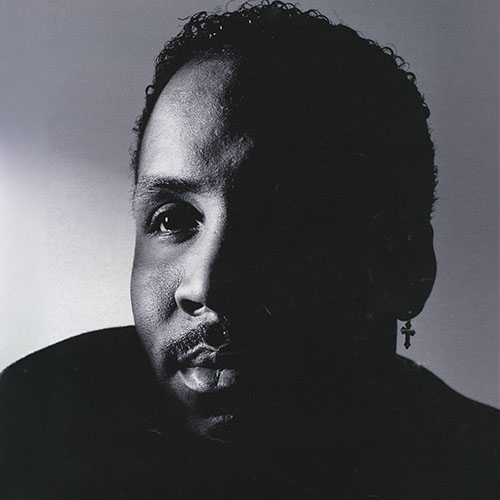
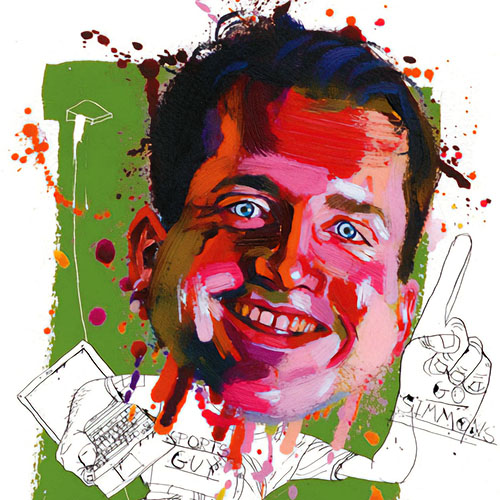
The resonant twangs of Oklahoma remain after all these years away from home. So does the exuberance for baseball, which today is channeled into various business and promotional ventures.
Mickey Mantle
Eighteen years after his retirement from the Yankees, he leads, perhaps now more than in the past, the life of an American sports idol. At his front door the stacks of letters from countless fans collect, forming an obstacle to visitors hoping to enter. And inside his elegant suburban Dallas home, the phone never ceases to ring. ”Hey Mick, will you sign 60 balls for a pair of $800 cowboy boots?“ one caller wants to know, and another, a representative of the Yankees, needs to confirm Mantle’s New York schedule.
While Joe DiMaggio, driven by an all-encompassing desire to be private, has retreated to the seclusion of his Florida home — accessible neither to the press nor to his fans — Mickey Mantle, especially in the last two years, has done just the reverse. He is totally at ease with his celebrity, comfortable with the hundreds of daily stares, gracious with the hellos from admirers he does not know. At his country club, the prestigious Preston Trail Golf Club — an elite, all-male bastion of Dallas money and society — Mantle is regarded reverentially, a best friend to oil barons and waiters alike. And the success of his best-selling memoir, The Mick, which has sold over 175,000 hardcover copies alone since its release in 1985, attests to the fact that no one, certainly not in 1986, has to ask, ”Where have you gone, Mickey Mantle?“
But Mantle, perhaps more than anyone, is puzzled by this resurgence in interest. Throughout the 1970s, he was not in great demand, and as recently as the spring of 1985, he was even prohibited from taking an active role in organized baseball for having agreed to work at Atlantic City’s Claridge Hotel. But shortly after Commissioner Peter Ueberroth decided to lift his and Willie Mays’s suspensions, a public perception of Mantle as perhaps the greatest American baseball hero of the postwar generation has emerged. ”Why all the popularity, why suddenly now?“ Mantle wants to know. ”You tell me why,“ he asks a reporter. The modesty is entirely genuine and one of Mantle’s nicest traits. This is one baseball star who has not forgotten his origins as a child of the Depression and son of a proud Oklahoma lead miner. Even as a millionaire and a successful Texas businessman, today Mantle retains an air of understatement and quiet dignity — a man as much at home in a honky-tonk bar as in a fancy corporate boardroom. ”I’m happy playin’ golf and goin’ fishin’,“ he can honestly declare.
No one can hope to explain the vagaries of the American public, but one thing is certain. The guys who were Mantle’s loyal contingent of fans in the 1950s and 1960s have finally come of age. Some of them now preside over major American corporations, while others dictate the editorial policies of leading magazines and newspapers. And perhaps a good many of them regard ”The Mick“ as a fitting symbol of the past, a living embodiment of a time when players had to pay their dues and likewise earn their pay. In contrast to many of today’s premier baseball stars, Mantle still seems awed by the wonder and richness of it all, surprised at the multimillion-dollar salaries that many top players command and at the willingness of owners to dole out that kind of cash.
Far from being idle, Mantle has thrived in retirement. His professional commitments can seem, at times, overwhelming. So too are the requests for speaking engagements. For the past 13 years, Mantle has served as a spokesman for Reserve Life Insurance Company in Dallas, and has acted for the past three years as the celebrated sports director of the Claridge Hotel. Over the last two decades, in fact, Mantle’s name has endorsed dozens of business ventures, ranging from a motel in Joplin, Missouri, to a chain of fried-chicken franchises.
Several new activities seem especially meaningful. Just this season, Mantle was signed up to announce 25 games for SportsChannel, a cable television station that airs Yankee games in the New York area. Mantle also participated in an hour-long documentary about the life of his former teammate, the late Roger Maris. It was an eloquently moving videotape portrait of one of the most gifted, but also unheralded, Yankees of the past. Roger for the Record includes reminiscences not only by Mantle, but also by Mrs. Maris, Clete Boyer, two of Maris’s teachers from Fargo, North Dakota, and others. While Roger for the Record sheds light on the past, Mickey Mantle’s Baseball Tips for Kids of All Ages, a videotape produced by CBS Fox Video, tells youngsters how to prepare for the future — how they can learn professional batting, pitching, and fielding styles. Not everyone can hope to have a father as dedicated as Mutt Mantle was, Mickey is quick to tell you. ”By the time so many fathers get home, it’s already dark, but if their kids had this videotape, they would be able to practice their play with some fine instruction,“ Mickey says.
Once fans have improved their batting technique, they’d be well advised to read The Mick, released in its paperback edition by Berkley Books in April. Mantle’s fourth autobiography (the first was Quality in Courage, published in 1964), the book, written with Herb Gluck, is a candid, oftentimes funny self-portrait of an old-fashioned ballplayer who cared more about playing ball than earning a seven-figure income.
Penthouse contributor and Omni magazine Features Editor Robert Weil, author of The Yankee Quizbook and a staunch Mantle fan for 24 years, traveled to Dallas to interview Mickey at his home. ”Is talking to Mantle almost like talking to God?“ an envious Yankee fan wanted to know. The legend, as it turns out, is far more formidable than the actual presence. At 54, he is both an insightful veteran and a prankish kid. The voice on tape belongs to the pin-striped hero, aware that he must be Mickey Mantle. The words are measured and enlightening, but cognizant of the tape moving silently in the background. Nonetheless, he is remarkably honest — about his carousing, which he believes shortened his career; about past owners, some of whom he disliked; and about today’s extravagantly inflated player salaries. Nor is he shy about expressing his heartfelt gratitude to his attractive wife, Merlyn, who in this interview candidly reflects on the tough lives that baseball wives, especially in the past, were forced to lead.
Off tape, though, Mantle exudes all the charm, playfulness, and down-home crudity that have made him the legendary sports hero that he is today. He is as much a fun-loving country boy as he always was, a one-time compatriot of notorious pranksters like Billy Martin and Whitey Ford. Over the years, maturity has also transformed Mantle into a distinguished Yankee great. Thirty-five years of involvement in major-league baseball have not tempered his good-natured irreverence, but have conferred upon him, certainly in the 1980s, a hero’s stature alongside the likes of Joe DiMaggio, Lou Gehrig, and Babe Ruth.
”The spirit is missing in today’s game. … These guys now come out with a lawyer and an agent. They all carry briefcases. … With all the money, it’s like 25 corporations coming out to the park.“
If you hadn’t gone into baseball, what do you think you would have done?
Mantle: I wouldn’t have had any choice. I would have been a lead miner. My dad, Mutt, was a lead miner, and everybody around the little town in Oklahoma where we lived was either a farmer or a lead miner. I was already working in the mines with my dad when I went to the Yankees [in 1951]. I’d probably be dead by now, because most of those guys got TB and died early.
Do you have friends who are still left in Oklahoma?
Mantle: There might be a few around, but not many. Most of all my dad’s friends have passed away by now. Most of my friends moved out of Commerce about the time that I graduated from high school, and the mine shut down right after that. There are some friends of mine still around there, but I haven’t been back to Commerce once or twice in the last ten years.
How much has being a child of the Depression affected your life?
Mantle: The Depression for us lasted longer than for most people. During that time, we lived in Spavinaw, Oklahoma, and I think that my dad was working for about 50 cents a week. His father was a butcher, and that’s the way we ate — from my grandfather. Later, my dad got a chance to move up to the lead mines in Commerce and in Pitcher. My grandfather came up there with us, and he worked in the mines, too. But we never realized we were poor, I don’t think. You go back up there now and look at the places where we lived, and you can’t believe it. It really looks like a slum.
In those days, though, we never thought that we were poor. We made our own ballparks, and we made our own baseballs out of that black tape that you put around water pipes. We always had gloves, and we could make our own bats from broomsticks or whatever. So we made our own entertainment. All we had to do then was play ball.
The Depression probably made a better ballplayer out of me. It made me realize that you got to work at whatever you’re doing all the time, and I’ve worked hard all my life. We had 19 milk cows at one time. I had to get up every morning and milk those cows and feed them and put the calves away. Then I’d go to school, come home that night, and do the same thing. One year we moved out to a farmhouse a couple of miles out west of town. We had 160 acres. We were like sharecroppers, since we worked for somebody else. My dad and I grew some crops for a while, and we had about 300 acres at that time, which sounds like a lot of land, but in that area, 300 acres is not very much. We farmed it, got the crops all in, and it looked like everything was going to be great. Then the river flooded everything. That’s when my dad had been trying to get out of the mines, and we had to move back to them, so he wouldn’t have TB.
Do you think ballplayers of your generation hustled more because of the circumstances they came from?
Mantle: I’m not one of those old-timers who thinks these guys aren’t as good as we were. You’ve got guys like Pete Rose or Dave Winfield that play hard. But I also think that there are a lot of guys in the major leagues today that don’t really bear down like the guys did in my day.
Didn’t the Depression make a difference for your generation?
Mantle: I never even thought about it until you brought it up. It may have made a difference. I think it made a family out of everybody, because everybody knew how rough life was. I can remember everybody used to have a terrible habit of popping up instead of running the ball out. When I popped up, Hank Bauer, Gene Woodling, Allie Reynolds, Vic Raschi, and Eddie Lopat would get hold of me and say, ”Hey look, you’re messing with our money. You know you’ve got to run those balls out, because we’re only going to be here two hours.“ So it was like a family, where your big brothers were getting on you. Casey didn’t have to call you out — the other guys would.
I think that spirit is kind of missing in today’s game. I haven’t been to spring training in years, but when I used to go, five years ago, as a coach for the Yankees, it was like a corporation. These guys come out with a lawyer and an agent. They all carry briefcases. Hell, we never had a briefcase. All we knew then was that we had rules. We had to be at the ballpark three hours early — but that was just talk baseball. Casey wanted everybody to be oujt there to talk about the team we were playing. After the game, Casey would always put two cases of beer — I think that was the limit — in the freezer. If we won the game, the beer was free. If we didn’t win, we had to pay for it. But anyway, I remember we would sit around in our uniforms, before we would ever think about taking a shower, and talk about what happened, talk about the game, talk about somebody having trouble. It was a family. Nowadays, just as soon a the game is over, these guys are whoosh, in and out. They don’t seem as close to eachother. I’m not one of those old-timers that don’t think they guys play as hard, because I see guys runnin’ over catchers, breakin’ up double plays, but then I also do see a lot of loafin’.
Why has the family spirit gone? Has too much big business entered the game?
Mantle: I think so, with all the money. It’s now like 25 separate corporations coming to the ballpark. It doesn’t seem to me like all 25 of them are trying to be close. You’d probably find that they are pretty much strangers to each other. When I played, there wasn’t anything that one guy didn’t know about another player. You knew everything — his wife, his kids.
Are you sorry that none of your four sons went into baseball?
Mantle: I’m sorry that I didn’t have a chance to work with them, because I’m sure that a couple of them are good athletes. I’m sure that if they would have had my dad, they could have been ballplayers, because he worked with me like hell. He’d come home from work at four o’clock in the afternoon, and even though I knew he was tired, we’d play ball until dark. He worked with me all the time.
What do your sons do now?
Mantle: Mickey works for me in the hotel in Atlantic City and helps me with my schedules. David was in Joplin working — managing a McDonald’s — and now he’s back down here in Dallas. He just moved back in the house. He’s now got a job in the food business. Billy is the one that had Hodgkin’s disease — what my dad died with. He is still fighting it a little bit. He’s been in remission for about three years now, and if he can go a couple more years, it will really be a good sign. And Danny is in New York looking to go into TV.
What I’d really like to do is get a Wendy’s, or some food chain like that, and get them all set up in that. I think that my real goal right now is to get a family business goin’.
If you had to do it over again, what would you do differently?
Mantle: Well, if you read my book [The Mick], you would see that I really didn’t take good care of myself. If there is a moral to that book, it’s for kids to take good care of their bodies. You got guys like Pete Rose, Hank Aaron, Stan Musial, Ted Williams that took good care of themselves and are at the top in all the lifetime statistics.
What records of yours would be different?
Mantle: Home runs. I retired when I was 36, and I was over the hill at 31. I only had 12 good years. If I could have played 20 years like the other guys, I would have done much better. I’m not saying I had bad breaks; it was just from being dumb. I was young and going good, and I didn’t think it was ever going to end. Even those old guys like Allie Reynolds and Hank Bauer used to tell me, ”If you guys don’t slow down, you are going to be over the hill before your time.“
And it sure enough happened. Of course, me and Whitey made the Hall of Fame, but it could have been better if what I’m saying. If you look up my record from 1964 till ’68, you’d know the last four years were just pitiful. All they had to do the last four years was walk me, and we wouldn’t hardly score.
One of the things that I regret more than anything else is that I didn’t hit .300, even though I was a .300 hitter. The reason is because they wouldn’t pitch to me. If you look at my record those last four years, I got over 100 walks a year. The balls I was swinging at I could just barely reach sometimes.
I remember in ‘65, when Minnesota was coming into its power. The Twins were playing us in Yankee Stadium, and we were behind 1-0 in the last of the ninth inning. When I came up with two outs, it started to rain. Billy Martin ran out to talk to Jim Kaat. I never forget this, because I knew what Billy was saying. ”Don’t let this guy hit one. Go ahead and walk him. They can’t score,“ Martin said. But Kaat told him, ”Nah, I’ll pitch to him.“ I could read Kaat’s lips. Anyways, I hit a home run in the left-center-field bleachers and tied the game 1-1, and we went ahead to win it later on. In those days, all you had to do was walk Mantle, because they couldn’t score.
”I can’t see how they can keep paying all those big salaries. A guy is hitting .240 with seven home runs and going to arbitration for $700,000 or $800,000. Shit. … that’s out of line.“
Is it true that in your last years, umpires often gave you the benefit of the doubt on close calls, umpires like Bill Valentine?
Mantle: Valentine! Shit, he was the one who loved to call me out. I went five years without talking to [Ed] Runge. He thought it was funny to call me out. I never yelled at him, but Runge told me one time that he would have liked for me to have turned around and yelled at him.
You don’t think you benefited, then, in those last five years, from being Mickey Mantle at the plate?
Mantle: No. It was about half-and-half. Half the umpires liked me and half didn’t.
Are you comfortable with being one of America’s great heroes?
Mantle: It’s flattering to me, although sometimes it can get under your skin, like when I go through airports or go out to eat in a restaurant. But most of the time it’s really flattering. Once in a while, I run into a drunk who says, ”I liked the Red Sox. Ted Williams is a lot better than you,“ or something like that. But that’s a minority. The good outweighs the bad.
Wouldn’t someone like Joe DiMaggio say otherwise, given the way he has retreated from the limelight?
Mantle: I don’t know what DiMaggio would say.
DiMaggio’s really preserved a shroud of privacy, far more than any other of the great baseball players.
Mantle: Well, he always did, even when he was playing. He was pretty much by himself. He wasn’t really like just one of the guys, you know. He was Joe DiMaggio. There weren’t very many like him around. I really don’t know what made him like that. Some people don’t like the public eye. It could be easy to get back into your shell.
Was DiMaggio tortured by being so well-known?
Mantle: He probably was, but he was also very gifted to be that way. It works both ways. As I believe, 90 percent is for the better, ten percent is for the worse.
During your playing career, it’s been said that you were very affable in the dugout but much more reserved to the outside. Is there any truth to that?
Mantle: The Yankees used to try to get me to tip my hat when I hit a home run, the way Ruth did when he ran around the bases. But I had a terrible habit of hanging my head, good or bad. And when I hit a home run, I’d run all around the bases with my head down. I think the fans thought that I said, ”Hell with them, I won’t tip my hat.“ But that wasn’t the case at all. To tell you the truth, I used to hate guys that would hit a home run and jump up and down — especially nowadays, when they hit a home run and stand at home plate and watch it go all the way out of the ballpark.
The Reggie Jackson type?
Mantle: I said ”they.“ To me, that’s showing up the pitcher, and the pitcher’s got to be feeling terrible anyway. He’s trying to make a living out there.
Have you mellowed since your retirement?
Mantle: Toward the press, yes. I still can’t believe that, all of a sudden, I’m popular after 15 years. I bet there was a time for about ten years where you didn’t hear from me. Suddenly, the last two or three years, it’s like I’m ”Mickey Mantle“ again. I can’t even explain the interest. Maybe the book. I’ve been on TV. I’ve done a few commercials lately. There is one thing that I might be able to put into words for you. The guys that grew up with me are now becoming presidents of corporations, and a lot of these guys are probably following what the old-timers are doing. They see me on airplanes all the time. ”Hey Mick, how you doin’?“ They always want to talk. From cabdrivers in New York to farmers in Oklahoma to company heads, they all ask me questions.
Were you always popular as a player in New York?
Mantle: When I first came to the Yankees, they said I was going to be the next Joe DiMaggio, Babe Ruth, and Lou Gehrig all rolled into one. It just didn’t work out that way, not until 1956. Even in 1957, when I hit .365 and was Most Valuable Player, there was still something between me and the fans that wasn’t working.
But when [Ralph] Houk took over, he put a shine on me and made me believe in myself. Houk said, ”As Mantle goes, so go the Yankees.“ He started to make me think I could play better. Another thing happened in ’61. Roger hit 61 homers, and he became the villain and I the golden-haired boy. New York fans are funny that way. They go for the underdog. I became the underdog and Roger the guy that beat Babe Ruth. Everywhere I went from then on, hell, I would get standing ovations.
Were you ever competitive with Maris?
Mantle: Hell, I wanted to win it. I wanted to hit more home runs than he did in ’61. I roomed with him that year, but we never had an argument. The press always wrote that we were at each other’s throats. That never happened. We kind of had a mutual admiration society between the two of us. Sometimes I might be sleeping a little bit late, and Roger would come in and whack me on the head with a newspaper. He’d say, ”Wake up, Mick, we’re fightin’ again.“ Then he’d show me a story where me and him had been having a big argument.
The ‘61 season didn’t bother me as much as it did him. I already had been through that once before. I’d also been playing in New York for ten years. I just tried to laugh it off with him all the time. But Roger had big patches of his hair comin’ out because of nerves.
When did you learn that Maris was sick?
Mantle: When we first found out he had lymphoma. I don’t think I was really scared until I threw out the first ball at Yankee Stadium in ’85 and Roger brought it to me from the dugout. That day, I started thinking that he was in trouble. He got real tired and looked bloated. He told me he wasn’t feelin’ good, and I said to my wife that I was worried about him. I think Roger’s funeral was the toughest since my dad’s.
Will Maris now be put in the Hall of Fame?
Mantle: I think he should be. I think that hitting 61 home runs is the greatest feat I’ve ever seen in sports. A lot of people tried it before, and nobody has even come close again in the last 25 years. It’s a hell of a record. The hardest single thing there is to do in sports is to hit a baseball. I really believe that. You take guys who play baseball—they can also play golf, basketball, or football. Might not be good at it. But you can’t just go and pick out a football or basketball player. They can’t hit a baseball going 100 miles an hour at their head. It’s the hardest single thing to do, and Roger hit 61 of them. There should never have been an asterisk next to the record. But if they had to put an asterisk there, they should have also put that Roger was one of the best all-around baseball players that ever lived. It’s not just hittin’ home runs.
You’ve gone on record recently, at a baseball writer’s dinner, describing former Yankee general manager George Weiss as the ”meanest cocksucker“ you ever met. Was he that bad?
Mantle: Were you there?
I know people who were there.
Mantle: Okay, well, I didn’t say he was the ”meanest cocksucker,“ like that. I said ”the old cocksucker,“ ha ha ha. It was a joke. I had a couple of drinks. But the people that were on the dais and most of the people in the audience realized that I wasn’t calling him a cocksucker. It was just a joke.
”Ballplayers make a million and a half dollars a year because people tell their kids, ”I want you to be like him.“ All of a sudden, you read about that player doing drugs. That’s not good.“
But in your book, Weiss doesn’t come off flattering, either.
Mantle: He wasn’t. But when he died, I didn’t like to go, Whew, I’m glad he’s dead. You know, I felt bad for him. He had to be what he was.
Was he just cheap?
Mantle: He wasn’t cheap, he was a good businessman. When I was coming up, the owners and the front-office people were smart, and the players were dumb. Now, I think it is reversed.
Has it gotten out of hand?
Mantle: Yes. I can’t see how they can keep paying all those big salaries like that. A guy is hitting .240 with seven home runs and going to arbitration for $700,000 or $800,000. Shit. I’m not really against all the big salaries, but baseball is not just baseball anymore, it’s entertainment. It’s TV. Hell, Johnny Carson gets $5 million a year for 90 minutes a day, five days a week. Players are on the field in front of the cameras three hours a day every day, sometimes six hours for doubleheaders. But I can’t see the guys that shouldn’t even be major-leaguers making $300,000 or $400,000. That’s out of line.
Do we need a George Weiss back in the front office?
Mantle: I don’t know if you need him back in the front office or not, but I bet he’s rolling over in his grave. I remember one year, in 1956, when [owners] Dale Webb and Dan Topping made him double my salary—the year I won the Triple Crown. It made Weiss mad. The next year, in 1957, I hit .365 and had 40 home runs and 100 RBIs. I was the Most Valuable Player, again. The first contract he sent me was for a $10,000 cut because I didn’t do as good as I did the year before. We didn’t have ten- and 20-year contracts, we had one-year contracts—and we got paid for what we did the year before. I don’t have any idea of how I would have acted with a long-term, million-dollar contract. All I know is that then I had to play, and I had to produce.
Would you ever have wanted to play for Steinbrenner?
Mantle: Shit, I would have loved it.
Why?
Mantle: Well, goddamn, I’d be making about $3 million a year.
Does Steinbrenner remind you of any of the owners of the past?
Mantle: Steinbrenner’s just a natural for getting publicity. Bill Veeck was that way, too. We never saw our own owners, Dan Topping and Dale Webb, except at victory dinners.
If you yourself were an owner, how would you run a club differently?
Mantle: Like Steinbrenner, I would want to be involved, but I would want to leave the managing to the field. That’s one thing that Topping and Webb always did. They never came down and told Casey how to run a team. Casey had 40 years in baseball.
Was Casey your favorite?
Mantle: I was only 19 years old when I first joined the Yankees, and my dad died after the first year. So Casey became almost another father to me, besides being my manager. I was like his protégé. He had picked me up out of the Rookie School in Phoenix. He saw that I could hit home runs both left and right, so he started saying that he was going to make a ballplayer out of me.
I was what you’d call his ”find.“ He put a lot of pressure on me by bragging so much. He’d tell people that I could outrun anybody, throw harder than anybody, and that I had more power in both hands than any other player. By the time I got to New York, I was also striking out more than anybody else, and he had to send me back to the minors.
I always liked the way Casey managed. He didn’t hold a grudge. He got mad at me one time for not running out a ball, so he took me out of the lineup. The next day I was right back in, and I came over hit two home runs. He came over, slapped me on the back, and said, ”Thataboy!“
Casey was one of the greatest psychologists I’ve ever seen. As long as you were going bad, he would never say anything, but if you were going good, that’s when he would get on you because he wouldn’t hurt you as much. And he had some great coaches — Jim Turner, Frank Crosetti, Bill Dickey, Tommy Hendricks — and he knew how to use them. You know, he gave them a lot of authority. I always thought that Casey was very smart.
Is it still possible to build a powerhouse team like the Stengel-era Yankees without paying out huge sums of money?
Mantle: Somebody could get lucky and get about five really good rookies who came up all of a sudden. I think the reason the Yankees were the Yankees for so long was that they raised their own minor-leaguers. That might be another reason that we were so close, because we all came up through one team’s minor league. It wasn’t then like they bought a guy from Oakland, a guy from Seattle, or a pitcher from Cleveland. It was like we all grew up together and came up through the same system.
Does that tradition continue with someone like Don Mattingly?
Mantle: Oh, yeah, Mattingly. I couldn’t think of a better example. And Dave Winfield, Ron Guidry, and Dave Righetti — they play hard, and play to win.
But Winfield’s not brought up through the system.
Mantle: No, but he feels like a Yankee now, though. Once you come into that stadium and put the pinstripes on, it does something to you. I saw a lot of guys come in there that they thought were washed-up—guys that would come in at the end of the season, old-timers like Johnny Hopp, Johnny Mize, Johnny Sain, Enos Slaughter. They would come over and play like goddamn champions.
If you hadn’t been a Yankee, but a Cub, an Indian, or a Dodger, how would your career have been different?
Mantle: If I’d-a played in a regular ballpark, I’d-a hit a hell of a lot more home runs. It was 480 feet to dead center when I played, and my power was to those monuments out there.
Other than your statistics, which probably would have been better elsewhere, would you have had the same popularity? Does playing in New York with those pinstripes make a difference?
Mantle: There’s no place like New York. I’ll give an example. I think the most underrated player in my era was Hank Aaron. Nobody even knew who Hank Aaron was till he hit 700 home runs. If he would have been playing in Yankee Stadium, he wouldn’t have hit 700 home runs, but he stuck in Milwaukee, where they probably got maybe three or four sportswriters and one TV station.
You came up in baseball a few years after Jackie Robinson joined the Dodgers. Do you think that blacks still have it tougher today than whites?
Mantle: I’ve never thought of it before, but I remember that when Elston Howard joined the Yankees during spring training, he sometimes would have to stay on the bus. In fact, I sat with him a few times and had chicken and barbecue with him on the bus. Since the South wasn’t integrated yet, it was tough on the first black players, but I don’t think it’s tough now at all. But why would you think to ask that?
I’m just curious.
Mantle: Do you know the salaries of some of those guys? How old is Dwight Gooden, 21? One million three hundred thousand dollars. Is that tough? I think Dave Winfield makes more money in one year than I made in 18.
”New York fans are funny that way. They do for the underdog. I became the underdog and Rogertheguy that beat Babe Ruth. Everywhere I went from then on, hell, I’d get standing ovations.“
During the 1950s, did Elston Howard have to be a role model, a player who had to set a perfect example?
Mantle: I don’t know whether he had to or not, but Elston did. He was the first black player the Yankees had and one of my all-time favorites. If we had a guy that got out of line, Elston would get him over to the side and talk to him. ”Hey, we got it pretty good here, you know?“ And I’ll tell you something else, Elston would do that with a white guy. He’d talk to him too, so it wasn’t just black or white.
Then everyone respected Elston?
Mantle: Yeah, and Billy and me loved him.
Let’s address another issue that rarely gets talked about in the press. Do baseball wives have tough lives?
Mantle: It’s really tough on them, especially the first couple of years, especially when they really don’t know anybody else that well. You’re there two weeks and gone two weeks. I remember I used to leave Merlyn just $20 to eat on for two weeks. Of course, steaks wasn’t $20 in those days, either.
Could she manage? Did Merlyn have to watch the money on $20?
Mantle: Yeah, we had to watch it. We was only making $7,500 that first year.
You got $2,500 extra from Casey in ‘51, didn’t you?
Mantle: Yeah. He said, ”Keep your mouth shut.“ Anyway, Merlyn hung around with Art Shallek’s wife and Billy Martin’s first wife, and they found out where they could go to eat. He had those little kids. She had to drive from Dallas to spring training, and from spring training to New York. Maybe the girls nowadays don’t have it as tough as the older girls because they have so much money and don’t have to drive the car to the next town.
But is it only the money?
Mantle: No, I think it’s being alone. I think that if you talk to any of the older wives, the majority of them are going to say that. One of the toughest things was carrying four little kids around. Putting them in school in Florida, taking them out of school, putting them in school in New Jersey, and always making new friends. We never rented the same house all the time, so she had to make new friends in every neighborhood we moved to.
We were considered like outsiders, too. Our kids were never accepted. It was like we were trash moving in. That’s the impression I got. Neighbors would never ask us to swim in the swimming pools. It was very lonely for me. It was not always a good life.
[to Merlyn]: What would you say is the toughest thing about being a baseball wife? The travel with the kids?
Mantle: Not really having any privacy, and the travel. I remember when Clete Boyer’s wife had a tiny baby, and then she had another one right away. Then he was traded. She put both babies in the car and drove to where Clete was. Here’s this young girl driving for two days with a baby she just had ten days before. It was not easy for the older wives.
How did Merlyn help your career?
Mantle: If it hadn’t been for Merlyn, I would probably have drank more than I did. Living with her out in New Jersey was a lot better than trying to live downtown in a hotel. When she was there, and I was out with her, I was doing pretty good.
Do you think that players fool around more today than in the fifties?
Mantle: I don’t know. Probably. They got a lot more money to do it on. I couldn’t tell you. I haven’t been around baseball as a player for 17 years.
How widespread was it in your day?
Mantle: What do you mean by fooling around? You mean goin’ out and drinkin’?
No, I mean women.
Mantle: No, it wasn’t. It probably is worse now than it was then, because I don’t think it was bad then. I think it was overexaggerated.
By sportswriters?
Mantle: Sportswriters nowadays are even more sensationalistic than they used to be. I’m going to give you a good example. The day the commissioner reinstated me in baseball, a story in the New York Post on Joe Pepitone said, ”Peppy teaches Mickey to smoke pot.“ It was an excerpt from his book that said he gave me one cigarette. If that’s not sensationalism, I don’t know what is.
Were you surprised at Pepitone’s drug arrest?
Mantle: Well, I know it didn’t floor me. I just hope he gets out of it all right. Pepitone could have been one of the all-time Yankees. He could run, hit, throw. He had all kinds of abilities, but he really didn’t. He was one of the guys that didn’t — didn’t look to me that he really cared that much whether we won or lost.
But weren’t there undisciplined players of your generation, people like Billy Martin? Wasn’t he traded for acting up one night at the Copacabana?
Mantle: That wasn’t the only thing that determined it. He had missed a couple of planes and trains. Mr. Weiss—I think George Weiss was just looking for a reason to get rid of him.
Why didn’t Weiss like him?
Mantle: I don’t know. We had Bobby Richardson in the wings. Mainly, it was because Billy wasn’t as disciplined as everybody else. He probably couldn’t scare Billy like he could the rest of us. He always thought that Billy was giving me advice on the side.
How has Billy changed over the years? You’ve known him a long time.
Mantle: He hasn’t really changed that much. He’s still just about the same old Billy I used to know. You can’t push him too far. He’s still his own man.
Do players like Sparky Lyle and Jim Bouton have the right to sell tell-all biographies that reveal the personal confidences of teammates?
Mantle: I think players can do it without really hurtin’ anybody’s feelings. I don’t feel I hurt anybody in my book, and I told some stories. I don’t talk about Bouton, but I think Sparky’s book [The Bronx Zoo] was all right.
Did Bouton’s book [Ball Four] hurt people?
Mantle: I don’t talk about that book.
Lately, we’ve heard so much news about drug-taking in baseball. It’s been suggested that major-league players, like Olympic athletes, should submit to urine tests.
Mantle: If I was playing, I would let them test me every day if they wanted to. If I struck out four straight times, I’d want people to know that I was all right. I wouldn’t want them to think I was high.
Was Commissioner Ueberroth correct with the penalties that he meted out to drug offenders?
Mantle: Anything he does, I’m for. I think he is a great man and commissioner.
Can we expect players to behave in a way that the public doesn’t? Face it, drugs are all over the country.
Mantle: One reason that ballplayers are making a million and a half dollars a year is because people go and see them play baseball, and then they tell their kids, ”That’s a great ballplayer there, son. You want to watch him. I want you to be like him.“ All of a sudden, you read about that player doing drugs. That’s not good. I think the baseball player does owe the public a little something.
Bowie Kuhn banned you from baseball for working at the Claridge Hotel in Atlantic City. How did you react when Ueberroth lifted your suspension?
Mantle: It was one of the best things that ever happened. Although I wasn’t in baseball anyway, I didn’t want to be banned. What if someday I had a grandkid? Say he would be sittin’ on Merlyn’s lap, and he would say, ”Grandma, why did Grandpa get banned from baseball?“ I’m proud and happy that Ueberroth put back my status.
I don’t think the public liked the original decision.
Mantle: I don’t think so either. I never had all but one or two bad letters, and I got a ton of them.
How will baseball be different in 14 years, in the year 2000?
Mantle: One thing I’d like to see is interleague play, like they do in football. People here in Dallas, where the Texas Rangers play, never got to see Willie Mays or Hank Aaron. And in Pittsburgh, they never got to see Ted Williams, Joe DiMaggio, Whitey Ford, or myself.
I’d also like to see the National League take up the designated hitter. It kept Hank Aaron, [Harmon] Killebrew, and [Orlando] Cepeda in the game longer. If they’d had the DH in my day, I probably could have played another year or two. You get to where you can’t really play ball, but you can still hit.
Is there any one player who has been responsible for holding your generation of Yankees together?
Mantle: I’ve always thought that Whitey Ford was like the leader. He was really like the chairman, and they called him the Chairman of the Board. I liked the way he acted — every time they asked him to, he’d be out there. He was a bear-down player.
Which baseball players do you keep in touch with?
Mantle: I see Billy and Whitey and Yogi a lot. We have a golf tournament in Joplin, Missouri — the Mickey Mantle Golf Tournament — for about 15 or 20 old-timers. We have a pretty good golf game, but it’s hard to get to Joplin.
And this year I’m going to have my 55th birthday at the Claridge. We’re having a big deal there, a big splash. Whitey Ford’s birthday is on the 21st, and I’m the 20th of October, and about 20 or 25 of my friends, like [Warren] Spahn, [Lew] Burdette, Whitey, Yogi, Phil Rizzuto, and Billy are going to come that week. We’re going to have a two-day golf tournament plus a dinner and a roast for me on the last night. That ought to be a lot of fun.
It can be interesting to read these “contemporary” interviews with athletes that happened forty years ago now. While considering high six-figure salaries “out of line” for the value of the work being done, the average Major League Baseball salary in 2026 comes in at $5.34 MILLION according to AP. A couple of years ago a single player signed an MLB contract worth more than three-quarters of a BILLION dollars. … You never want to think about how those salaries compare to those of people who do more important things — like almost everything else — or it will just make you sad.